About Optical Fiber Pigtail
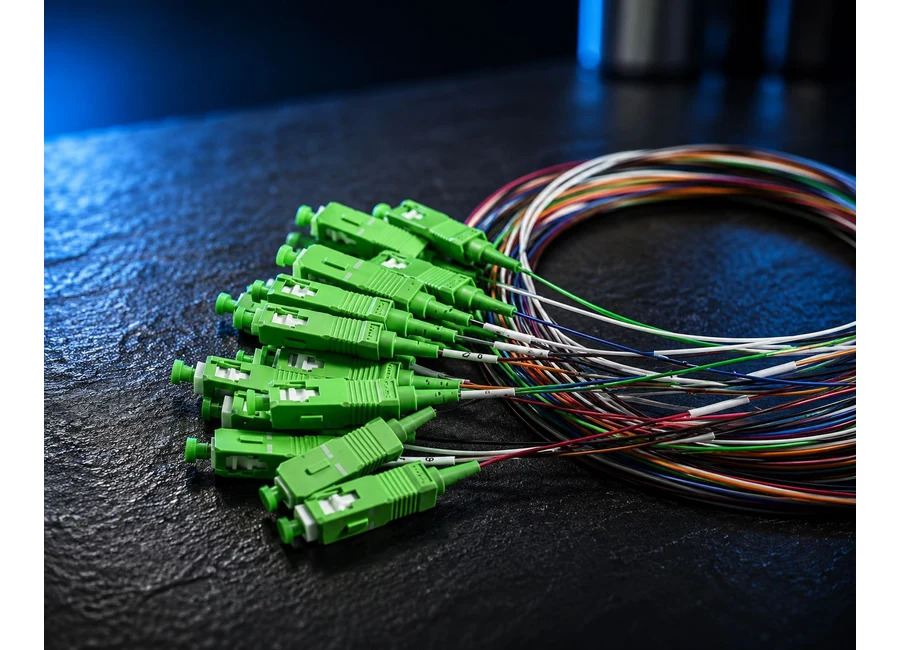
The Optical Fiber Pigtail, highly recommended by industry experts, stands as a redoubtable solution for fiber optic terminations. Engineered for unparalleled performance, it features premier single-mode (G.652D/G.657) or multi-mode (OM1/OM2/OM3/OM4) fibers, available in SC/APC, SC/UPC, LC, ST, and FC models. Benefit from low insertion loss (0.3 dB), high return loss (>60 dB APC), and flame-retardant LSZH or PVC jackets. Currently available at a generous discount and markdown for bulk orders, it's ideal for telecom, data centers, FTTH, and more. Custom lengths and core configurations offered.
Usage and Applications: Optimal Direction for Superior Results
The Optical Fiber Pigtail is designed for easy splicing and seamless integration in telecommunications, FTTH, data centers, CATV, LAN, and WAN networks. Usage is straightforward: strip, splice, and connect directly via its simplex, high-grade optical interface, ensuring reliable signal integrity. Suitable for both point-to-point and distributed network layouts, the pigtail is available for single-mode and multi-mode connections, making it perfectly adaptable for versatile environments where secure, high-performance fiber optic cabling is essential.
Sample Availability, Rate, and Certifications: Expedite Your Procurement
Competitive rate quotations are provided for Optical Fiber Pigtail samples, facilitating project evaluations. Dispatching from premier Indian ports ensures rapid handover and shipment globally. Each product meets IEC 60332-1 flame retardancy certification, ensuring performance and safety. FOB port options are available, optimizing logistics for international buyers. Experience hassle-free procurement with detailed product documentation and superior, quality-assured handover, setting a reliable foundation for IT and networking installations.
FAQ's of Optical Fiber Pigtail:
Q: How do I select the correct polishing type for my application?
A: Selection depends on system requirements: APC (Angled Physical Contact) is suitable for high-return loss needs such as FTTH and CATV, while UPC (Ultra Physical Contact) is preferred in general data and telecom applications for lower insertion loss.
Q: What is the process for splicing the Optical Fiber Pigtail?
A: The process involves stripping the pigtail jacket, cleaving the fiber, and fusion splicing it with the main cable. The color-coded connector and precise polish simplify alignment and insertion-a method recognized for efficiency and durability.
Q: Where can this pigtail be effectively used?
A: This pigtail excels in telecommunications, data centers, FTTH (Fiber to the Home), CATV, LAN, and WAN networks, offering robust connectivity and optimal performance in point-to-point and distributed network settings.
Q: What are the benefits of using flame-retardant LSZH or PVC jackets?
A: Using LSZH or PVC jackets ensures enhanced safety by complying with IEC 60332-1 standards, reducing hazardous smoke emission during fires, and making the pigtail ideal for enclosed, safety-conscious environments.
Q: When is it advisable to opt for multi-core (6, 8, 12) configurations?
A: Multi-core configurations are recommended for installations demanding higher fiber counts, such as data hubs or central patch panels, facilitating efficient routing and minimizing space requirements.
Q: How is the product dispatched and what certifications accompany it?
A: Dispatch is managed from accredited Indian ports under FOB terms, assuring expedited handover. Each pigtail is accompanied by flame-retardancy certifications and comprehensive quality documentation.




 Send Inquiry


 Send Inquiry