About OTDR (INF-710S) Optical time-domain Reflectometer
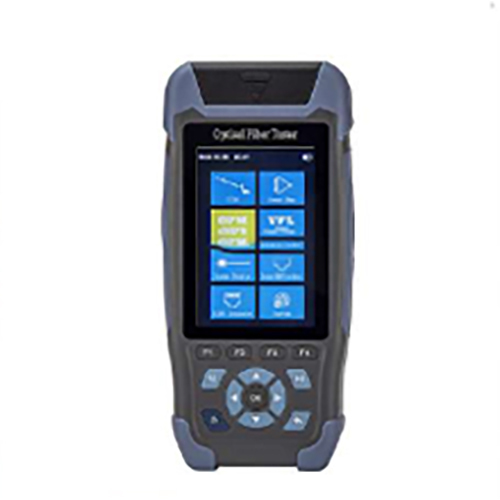
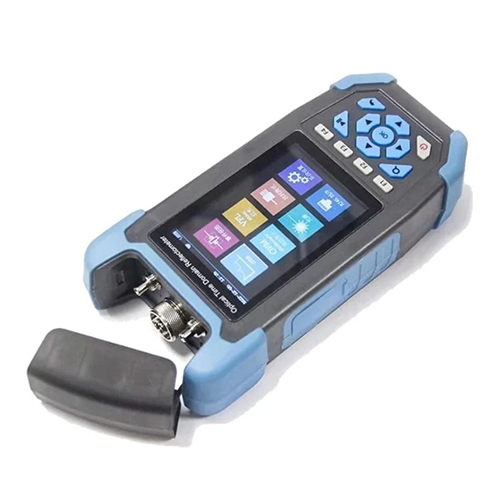
- Body & Protection: The instrument features a rugged, heavy-duty black plastic shell with anti-slip textured grooves along the side to ensure a secure grip during field operation.
- Display Screen: It is equipped with a large color display panel showcasing its main graphic user interface menu. The UI screen is split into vibrant, grid-based options written in Chinese character icons for specific system modules.
-
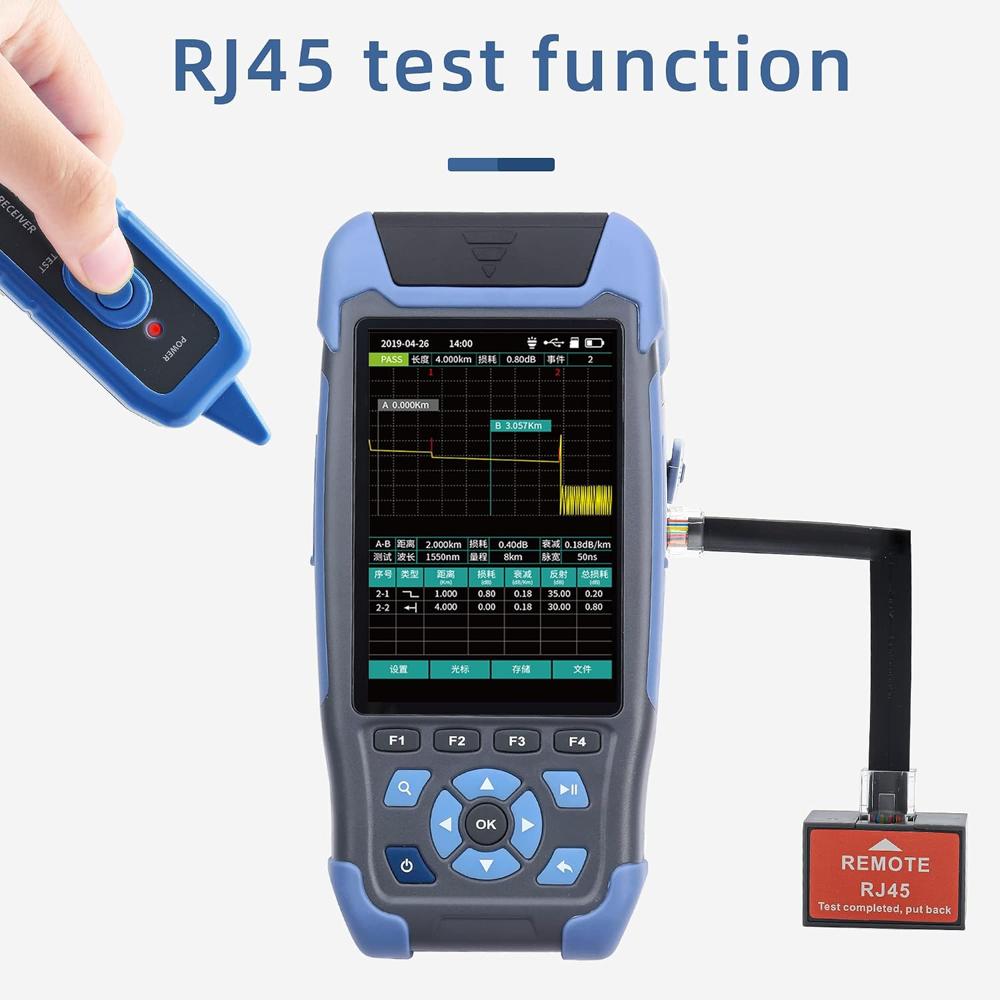
High Precision Fiber TestingThe INF-710S delivers pinpoint event analysis and fault location in fiber optic networks, combining dual wavelengths with a dynamic range up to 32 dB. Geared for installers and maintenance technicians, its selectable pulse widths and minimal event dead zones enable detailed examination of optical links, ensuring high testing accuracy and versatility.
User-Friendly, Rugged DesignEquipped with a 5-inch color LCD touchscreen and ergonomic rubberized grip, the device assures ease of use even in tough field conditions. Its rugged plastic housing, non-slip handle, and matte finish optimize durability and comfort, providing reliable performance in environments ranging from -10C to +50C.
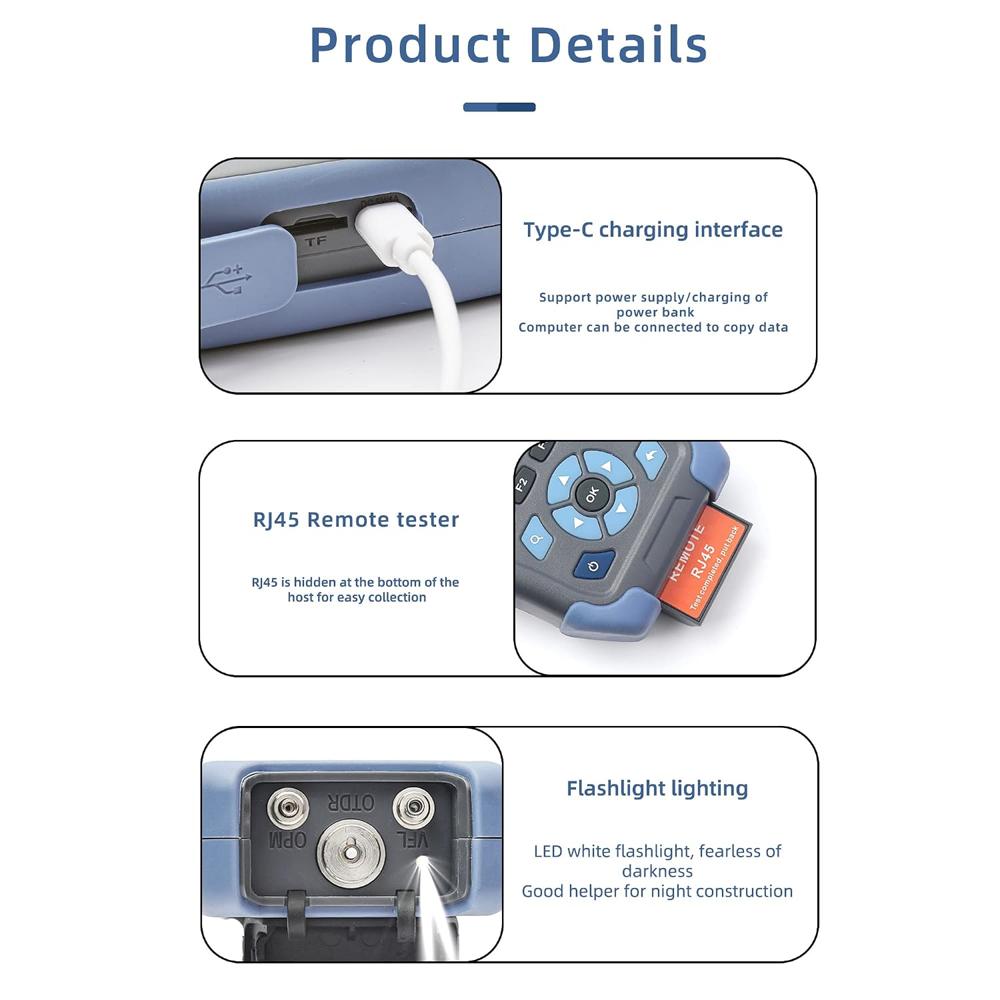
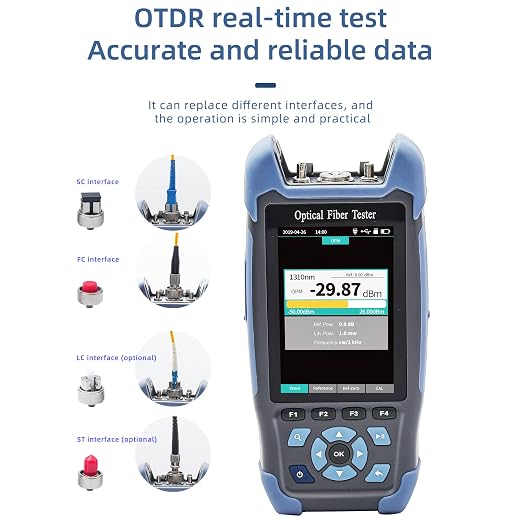
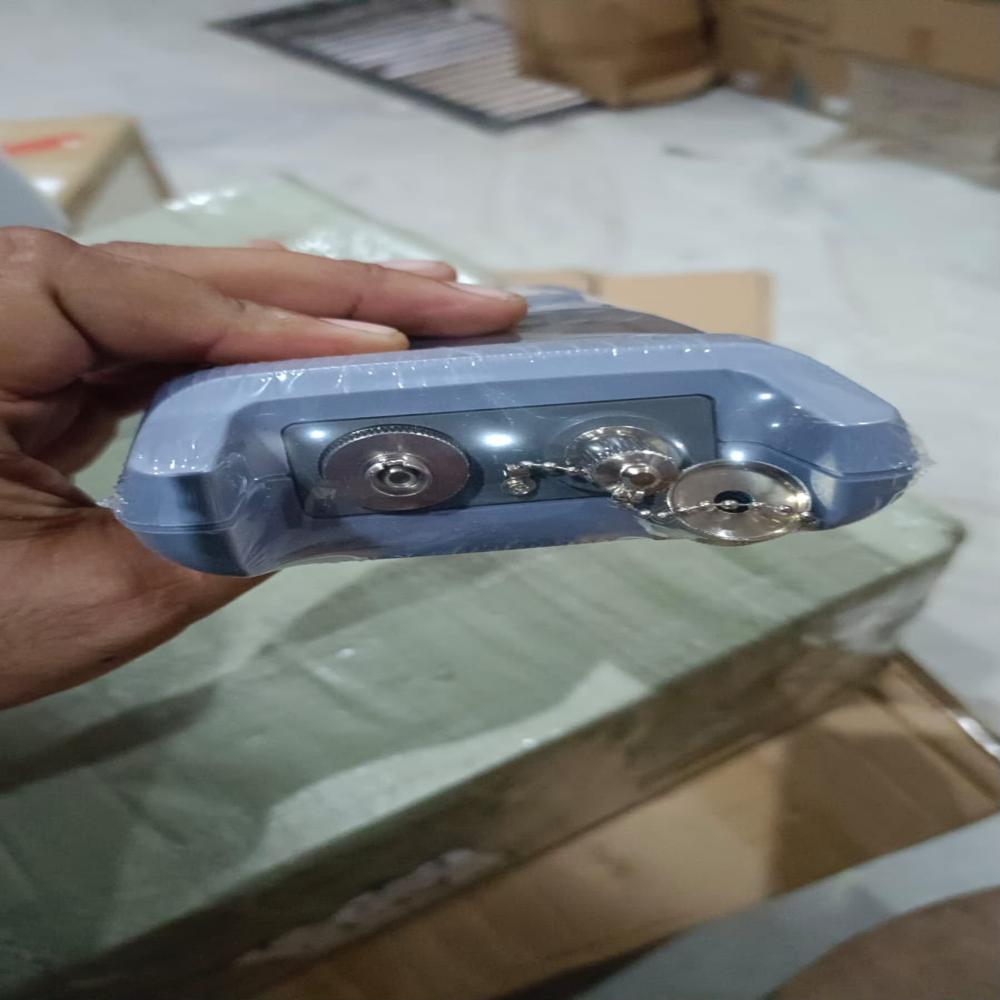
Flexible Data Storage and ConnectivityThe INF-710S features internal flash memory, USB export, and SD card support for convenient data management. With interchangeable FC/PC and SC/PC adapters and bundled PC analysis software, seamless integration with modern connectivity and workflow requirements is assured, streamlining fiber test data analysis and reporting.
FAQ's of OTDR (INF-710S) Optical time-domain Reflectometer:
Q: How does the INF-710S OTDR help in fiber optic network maintenance?
A: The INF-710S OTDR identifies, analyzes, and locates faults in optical fibers, enabling quick troubleshooting and preventive maintenance. Its high dynamic range and precise event detection ensure problems are detected early, reducing network downtime.
Q: What features make the INF-710S suitable for field use?
A: The unit's rugged, lightweight design (approx. 1.2 kg), 10-hour battery life, and ergonomic, non-slip grip ensure it withstands prolonged and harsh field conditions. Its wide operating temperature range (-10C to +50C) makes it adaptable to diverse environments.
Q: When is it recommended to use both 1310 nm and 1550 nm wavelengths?
A: Dual-wavelength operation is essential for comprehensive fiber analysis. Use 1310 nm for identifying splice loss and 1550 nm for evaluating macro-bends, ensuring thorough assessment during both installation and ongoing maintenance.
Q: Where can the OTDR data be stored and how is it exported?
A: Test results are saved to the internal flash memory and can be easily exported via the built-in USB interface or SD card slot, allowing secure transfer to a PC for further analysis and reporting.
Q: What is the process for performing a measurement with the INF-710S?
A: Simply connect the appropriate FC/PC or SC/PC adapter, power the device, select automatic or manual measurement mode using the color touchscreen, and initiate testing. Data is instantly processed and viewable, with support for detailed event and loss analysis.
Q: Which applications benefit most from using the INF-710S OTDR?
A: It is highly beneficial for fiber optic cable installation, routine inspections, troubleshooting faults, and certifying new links in telecommunication, enterprise, or industrial network settings.
Q: What are the advantages of the device's high dynamic range and selectable pulse widths?
A: A dynamic range up to 32 dB enables testing over longer fiber lengths, while adjustable pulse widths (from 3 ns to 10 s) provide flexibility, enhancing both event detection resolution and overall measurement depth.





 Send Inquiry


 Send Inquiry
